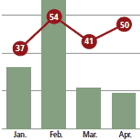
Investment activity in U.S.-listed emerging growth companies via equity private placements surged 77% in the first quarter, while the average size of new placements rose 24% to more than $5.5 million, an impressive rebound from the final quarter of 2011. Even more impressive was the flood of money into growth-oriented “unstructured” equity private placements (EPPs) in emerging growth companies by long-term fundamental investors, which rose 268% over the previous quarter to $5.88 billion, representing 73% of all capital invested via equity-linked private offerings in U.S. public companies.1
The flow of growth-oriented private placement capital into emerging growth companies2 has eclipsed traditional “structured” private placement (i.e. “financial PIPE”) activity in the EPP market in terms of the percentage of deals and dollars for the second straight quarter, as growth capital investors embrace EPPs as an efficient vehicle to acquire and nurture positions in up-and-coming public companies. Unstructured equity private placements, unlike their financially-engineered structured cousins that once dominated the EPP market, are aligned with common shareholder interests and contain no variable conversion prices, resets, pre-sold equity line puts, or offsetting hedges that disengage structured investors’ returns from those of common shareholders. Fueling this trend are venture capital, private equity and other “long-only” and long-term growth-focused investors, which have embraced the EPP market and are providing leadership in identifying and nurturing high-growth companies during their earliest stages of post-private life. These “sponsored” growth capital EPPs, which include at least one fundamental investor that is primarily a venture capital, private equity, mutual fund, family office or corporate strategic investor, accounted for 31 deals comprising $3.81 billion in capital in the first quarter, with the median placement valued at more than $15 million.