
Webinar Archive Now Available

The complete archive of Growth Capital Investor's monthly webinar series is now available for premium subscribers. Click on the "webinars" tab at the top of the page to catch up on the top issues and trends in the market for emerging growth company finance. Enjoy the full audio and visual presentations, optimized for desktop, tablet or smartphone viewing. Included is our most recent program, webcast July 25, "Public Solicitation of Private Offerings: Implications of the SEC’s Repeal of the Marketing Ban for Reg D Deals." This 90-minute discussion by three of the top attorneys active in advising issuers, investors and agents in equity private placements is not to be missed if you are actively involved, or considering becoming involved, in a private offering of securities for your company or investment fund. "Public Solicitation of Private Offerings" like all our monthly webcasts, is complimentary with your paid subscription to Growth Capitalist's premium newsletter, Growth Capital Investor.

Public Solicitation of Private Offerings: Implications of the SEC’s Repeal of the Marketing Ban for Reg D Deals

The repeal of the general solicitation ban on private offerings will change the way capital is raised by all private and public emerging growth companies - those that seek to incorporate public solicitation into their capital strategy as well as those who don't. Join our panel of expert Reg D legal counsel as they address the immediate impacts on PIPE offerings, investment fund marketing, reverse mergers and alternative public offerings, and direct private offerings. Complimentary for subscribers. Click here for more info and to register.

SEC

Repeal of General Solicitation Ban Ushers in New Era for Private Offerings

Last week’s long-anticipated repeal of the ban on public advertising of private securities offerings either ushers in a new era of transparent, information-rich, digitally-greased, and crowd-vetted capital markets, or it is a leap into the abyss that will pervert the most trusted capital markets in the world into a carnival midway of investment hustlers, crowd madness panderers and common thieves. That seems to be the consensus, or lack thereof, of regulators and growth capital professionals surveyed in the wake of the SEC’s action to implement the mandate set by Congress a year ago when it passed the JOBS Act. On July 10, the Securities and Exchange Commission held an open meeting regarding its nine-month old proposal to repeal the ban on the advertising and general solicitation of Regulation D securities offerings. Although the amendment, known as Rule 506(c), was ultimately adopted, concerns regarding investor protection were raised by two commissioners, Elisse Walter and Luis Aguilar. 

Walter’s concerns about the risks of fraud and the promotion of investments inappropriate to less sophisticated investors came short of persuading her to vote against the repeal. Aguilar was blunter in his criticism, decrying the Commission’s move to repeal the ban before approving additional mitigating rules aimed at keeping “bad actors” out of the market and strengthening disclosure requirements for private offerings.

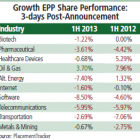
Energy Exploration, Medical Device Growth EPP Issuers Buck Post-Deal Price Drops in Q2

The stock market’s bull run in the first half of 2013 that pushed the Dow Jones Industrial Average and Standard & Poor’s 500 indexes to all time highs failed to influence initial investor reaction to growth equity private placements (EPPs). Looking at stock price performance on an industry-by-industry basis, investors largely sold on the news of a private deal, and sentiment three days after announcement was frequently more pessimistic than the response over the first half of 2013, according to analysis by Growth Capital Investor. Additionally, transaction activity slowed from a year earlier while the average dollar amount fell, according to data provided by PlacementTracker, a division of Sagient Research. Growth EPPs are offerings of a least $1 million of stock or equity-linked debt that feature fixed purchase, conversion and warrant exercise price terms, and that are sold by companies that have market capitalizations from $10 million to $1 billion as well as a share price of at least $1 at closing. The three-day post-announcement stock performance data examined excluded rights offerings, at-the-market offerings and structured equity lines.