
World Health Alternatives

Jail the Finale in WHA Reverse Merger Saga

The former president of defunct PIPE issuer World Health Alternatives (WHAIQ) has been sentenced to more than a decade in prison for crimes including manipulating earnings numbers and diverting to himself at least $2 million generated when the company issued stock. Former president, CEO and board member Richard McDonald received a 130 month prison sentence from a U.S. District Court judge. Leechburg, Penn., resident McDonald was found guilty of criminal charges of wire fraud, securities fraud, providing false regulatory statements, tax evasion and failing to remit payroll taxes. "World Health Alternatives was a publicly traded company, and ultimately became defunct and filed for bankruptcy protection as a result of the defendant’s criminal conduct," Judge Joy Flowers Conti wrote in her findings. "Less than a week after defendant’s resignation, the value of World Health Alternative shares decreased from $3.55 per share to $0.49 per share."
SEC Doubles Down on Bogus Opinion Attorneys

Regulators are cracking down on two securities attorneys who allegedly failed to heed previous warnings to stop writing improper legal opinions to sell shares. In separate actions, the Securities and Exchange Commission filed suit against Dominican Republic resident Guy Jean-Pierre and began administrative proceedings against William Reilly, who was licensed to practice in New York. Legal opinions are required to allow the sale of restricted shares without going through the paperwork involved in registering an offering. The use of bogus opinions to remove restrictive legends has often played a role in allowing the improper sale of insider shares to the public, often in conjunction with the use of misleading publicity to boost stock prices. In such cases, retail buyers are often unaware that the sale of huge numbers of shares is diluting the value of the issuer's equity.

China North East Petroleum PIPEs Diverted Millions, SEC Says

Management of China North East Petroleum (CNEP) diverted over $6 million from two registered direct offerings to family members according to a suit filed by the Securities and Exchange Commission. Some $6.9 million diverted from two registered direct offerings in 2009 was part of a larger scheme of almost $60 million in illegal transfers, the SEC says. CEO Wang Hongjun and Wang's mother Ju Guizhi (and founder and former director) allegedly transferred funds in at least 176 related-party transactions. The commission's suit says the undisclosed activities included $28 million in payments to Wang and Ju, along with $11 million in loans and around $20 million in "unusual post-year-end adjustments that purported to eliminate the remaining debts owed by Wang and Ju to CNEP." The allegedly illegal transactions took place in 2009, when the company raised a total of $31.9 million in registered direct offerings in September ($18.4 million) and December ($13.5 million).

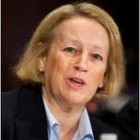
Mary Shapiro

Resignation to Prolong JOBS Act Wait

Champions of small growth companies were filled with optimism in the spring that the Securities and Exchange Commission would swiftly write rules to implement capital-unleashing provisions in the JOBS Act. By early fall they began to temper their expectations, hoping that maybe some regulations would fall into place around the beginning of the year. But last week’s resignation of SEC Chairman Mary Schapiro is turning any remaining optimism into despair – at least in the short term. While Schapiro has been largely criticized for dragging her feet on addressing the JOBS Act, the agency now finds itself in a transition period without a full complement of commissioners that some believe could delay full implementation of the Act until early 2014 or later. Shapiro’s  departure creates even more uncertainty about when the commission will get around to finalizing rules that would allow issuers to advertise Rule 506 offerings to accredited investors, enact crowdfunding and increase the size of Regulation A offerings.