Sandy Left Behind Market Doldrums

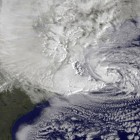
Hurricane Sandy’s devastation of the Northeast led to widespread power outages, gasoline shortages, communication breakdowns and public transportation shutdowns. It also delivered a blow to growth companies trying to raise capital in what’s normally considered the busiest deal-making time of the year. Issuers completed only 21 growth equity private placements (GEPPs) in November, raising $704.8 million according to PlacementTracker, a division of Sagient Research. That was about half of the number of monthly transactions that companies raised capital in each of the preceding three months, which netted companies more than $1 billion per month. At the halfway mark of 2012, public companies with market capitalizations from $10 million to $1 billion and share prices over $1 had raised $6.6 billion in 216 deals through the private placement of fixed-price registered and unregistered common stock, and fixed-price convertible securities.

China North East Petroleum PIPEs Diverted Millions, SEC Says

Management of China North East Petroleum (CNEP) diverted over $6 million from two registered direct offerings to family members according to a suit filed by the Securities and Exchange Commission. Some $6.9 million diverted from two registered direct offerings in 2009 was part of a larger scheme of almost $60 million in illegal transfers, the SEC says. CEO Wang Hongjun and Wang's mother Ju Guizhi (and founder and former director) allegedly transferred funds in at least 176 related-party transactions. The commission's suit says the undisclosed activities included $28 million in payments to Wang and Ju, along with $11 million in loans and around $20 million in "unusual post-year-end adjustments that purported to eliminate the remaining debts owed by Wang and Ju to CNEP." The allegedly illegal transactions took place in 2009, when the company raised a total of $31.9 million in registered direct offerings in September ($18.4 million) and December ($13.5 million).

Cloudy Fiscal Future Mars Growth Capital Formation

Eleven months into the year, it’s clear that 2012 is shaping up as one of the worst capital raising environment for small growth companies in recent memory. While deal making in the first half of 2012 suggested that activity would at least match 2011, the pace of transactions have trailed off since July 1 amid uncertainty surrounding the elections and future tax and spending policies in Washington D.C.

So far this year, growth companies and investors have raised $11.8 billion in 379 growth equity private placements (GEPPs), according to PlacementTracker, a division of Sagient Research. By comparison, there were 417 transactions completed that generated $12.3 billion in financing in the first 11 months of 2011, and 538 deals valued at $13.8 billion over the same 2010 period. At the halfway mark of 2012, issuers had raised $6.6 billion in 216 deals. The growth equity private placement dataset comprised emerging growth companies with market capitalizations from $10 million to $1 billion with share prices over $1.

Mary Shapiro

Resignation to Prolong JOBS Act Wait

Champions of small growth companies were filled with optimism in the spring that the Securities and Exchange Commission would swiftly write rules to implement capital-unleashing provisions in the JOBS Act. By early fall they began to temper their expectations, hoping that maybe some regulations would fall into place around the beginning of the year. But last week’s resignation of SEC Chairman Mary Schapiro is turning any remaining optimism into despair – at least in the short term. While Schapiro has been largely criticized for dragging her feet on addressing the JOBS Act, the agency now finds itself in a transition period without a full complement of commissioners that some believe could delay full implementation of the Act until early 2014 or later. Shapiro’s  departure creates even more uncertainty about when the commission will get around to finalizing rules that would allow issuers to advertise Rule 506 offerings to accredited investors, enact crowdfunding and increase the size of Regulation A offerings.